Context
MolsonCoors wanted a machine to safely depressurize sealed beverage containers at high-energy venues — puncturing or un-capping cans and bottles automatically. On a four-person senior-capstone team I owned the orientation subsystem, which takes any container and centers and rotates it for the tools above based on inputs from a limit switch-driven height-detection system.


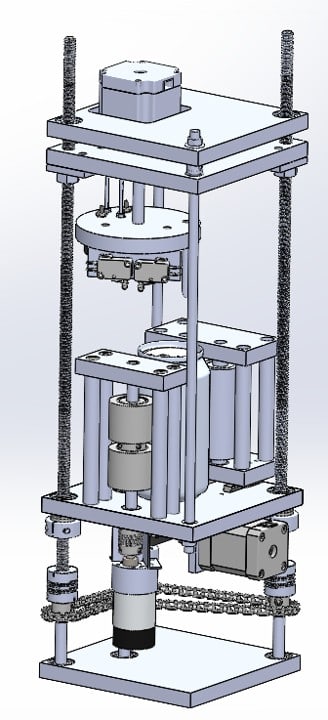
Orientation subsystem
The subsystem had to receive an aluminium can or bottle, center it, and rotate it to interface with the tools above — handling four container sizes (12 oz cans, skinny cans, tall cans, and 16 oz pint bottles) inside a 6″ × 6″ footprint and within a quarter of the project's $1,000 budget. After weighing slew drives and rotary actuators (too slow, expensive, or oversized), I settled on a two-roller mechanism: a drive roller, held between two aluminium plates and turned by a DC motor, applies torque to spin the container; two freely spinning rollers, actuated by a stepper motor through a rack-and-pinion, center the container and press it into the drive roller.
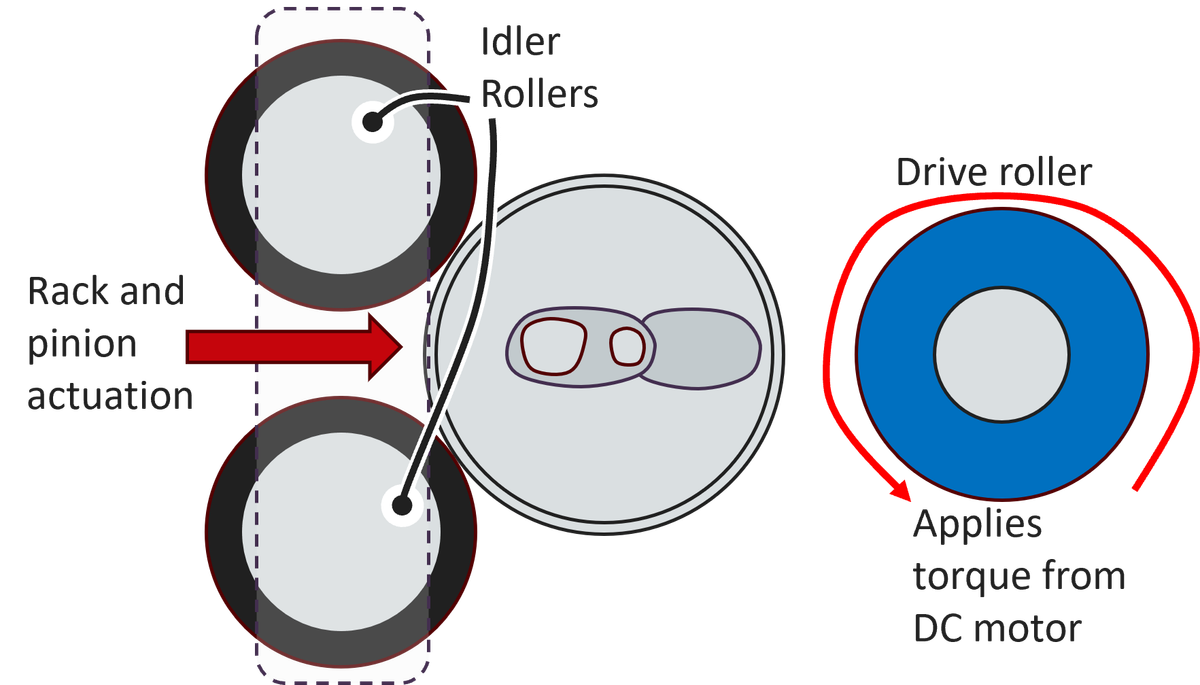
Testing & results
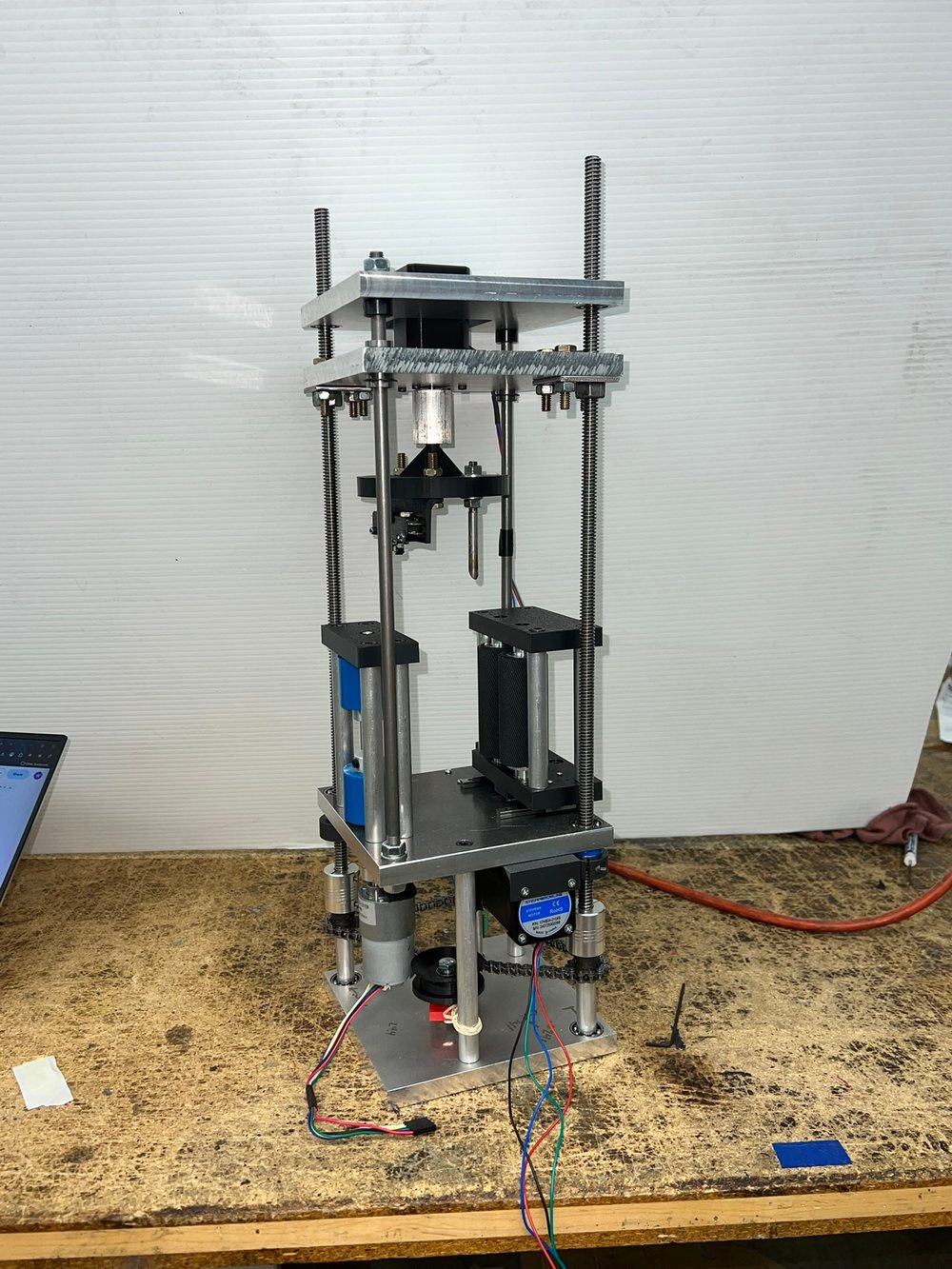
I kept design choices objective — a decision matrix weighing safety, complexity, and cost, rapid prototypes in wood and 3D print, and bench testing against the targets (about 20 in-lb to twist off a cap and 30 lb to puncture a can), which also drove material calls like the chemically resistant 40A polyurethane rollers chosen for grip on a condensation-covered can. The finished subsystem centers and spins all four container sizes and integrated cleanly with the rest of the team's machine.